
Support for children’s language development is a key feature of quality in early care and education settings. Frequent language stimulation is expected of teachers regardless of the age and verbal ability of the children in their care. Infants listen to the words they hear adults saying, and they communicate through sounds and gestures. Toddlers begin to talk in simple sentences, ask questions, and share their opinions. Preschoolers use the more complex language they learn from adults and books, often telling stories or sharing memories or plans. Children of all ages enjoy talking with adults they know, and they need many opportunities to engage in conversations to build a strong foundation for communication.
During the site visit, TRS assessors will evaluate how well the teacher supports children’s language, models language when talking to children, encourages children to talk, and uses language to expand children’s understanding.
Stop and Reflect

How would you describe how you respond to children’s communication attempts?
How confident do you feel:
-
- Modeling language when you talk with children?
- Encouraging children to talk?
- Elaborating on children’s comments, questions, and ideas to build their understanding?
What support do you need from your Texas Rising Star mentor to help you support children’s language development?
Define
Texas Rising Star has 10 measures related to language facilitation and support, but there is some overlap across measures. Click the links to learn more about these measures.
-
- P-LFS-01: Listens to children attentively and responds appropriately to their language, vocalizations, and nonverbal attempts at communication
- P-LFS-02: Uses positive verbal responses and encouragement to provide reinforcement or acknowledge positive behavior or accomplishments
- P-LFS-03: Uses language to add meaning or expand on children’s interests or agenda
- P-LFS-04: Communicates with children throughout the day (in whole group activities, small groups, mealtimes, and outdoor play)
- P-LFS-05: Uses descriptive language (specific labels and descriptors)
- P-LFS-06: Provides children with frequent opportunities to talk with teachers (in small group, whole group, outdoor play, and mealtimes)
- P-LFS-07: Allows children time to respond to questions before providing the answer or asking another question
- P-LFS-08: Engages children in conversations (three–five turns) about a variety of topics or provides commentary and encourages back-and-forth vocalization/gestures with infants and toddlers
- P-LFS-09: Expands on children’s understanding or initiation by elaborating on what children say or draw attention to
- P-LFS-10: Extends children’s language and/or models for children how to express complete ideas or sentences
Learn

Talk with Me is a three-part series of courses designed to provide teachers and caregivers of infants and toddlers with the skills and knowledge to support language development. Participants will learn about language milestones, theories, and long-term outcomes through video segments, expert interviews, and research-based resources. (6 hours)
Age group(s): Infant, ToddlerResource Type: Online Course
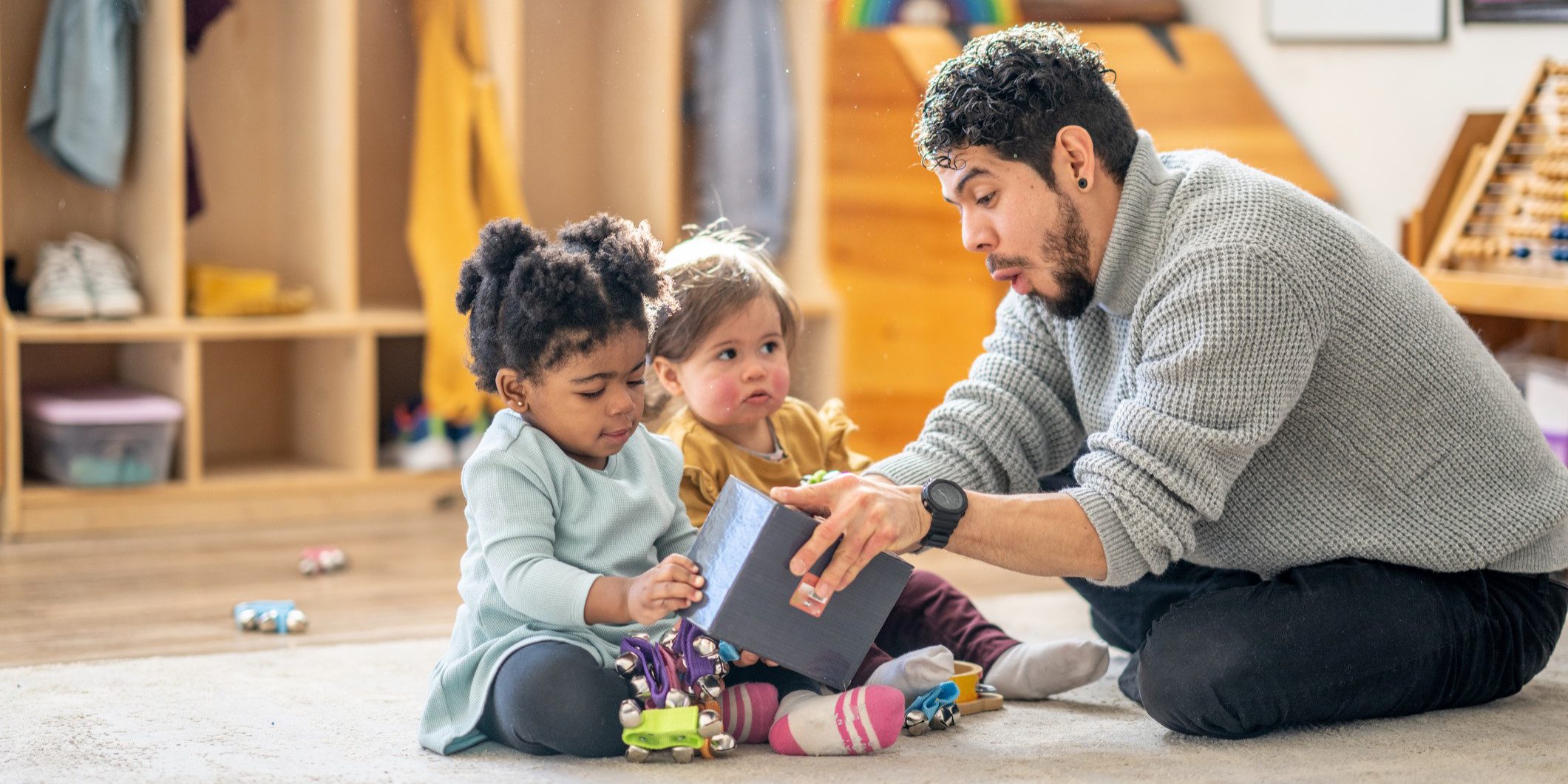
This page introduces four key areas of infant-toddler language and communication, and links to activities within the Circle Activity Collection: Infant and Toddler that facilitate language development.
Age group(s): Infant, ToddlerResource Type: Activity

This publication from Penn State Extension provides readers with steps they can take to help children develop early literacy and language skills. This resource is written for infant, toddler, and preschool teachers and provides suggestions for each developmental stage.
Age group(s): Infant, Toddler, PreschoolResource Type: Publication

eCircle Professional Development Series – Building Vocabulary is a course teachers can take to help enhance and develop theme-based vocabulary instruction for their prekindergarten children. Practitioners will learn teaching techniques in both English and Spanish that can help them create a classroom environment based on themes that help children grow in language and vocabulary development.
Age group(s): PreschoolResource Type: Online Course

This course focuses on key elements of encouraging children’s talk: responsiveness, rich content and stimulation, and emotional support. Practitioners will learn scaffolding strategies for children’s talk that will encourage them to flourish within the classroom environment. (6 hours)
Age group(s): PreschoolResource Type: Online Course

This is a self-paced tutorial created to help educators understand the best ways to engage children in meaningful conversations. The video includes sections on how to build in opportunities to talk, modeling conversations, and using complex language and vocabulary with children.
Age group(s): Toddler, PreschoolResource Type: Online Course

This page includes strategies for embedding high-quality language support and links to activities within the Circle Activity Collection that facilitate language development.
Age group(s): PreschoolResource Type: Activity

This publication from Penn State Extension provides readers with ideas of how they can purposefully guide and support children’s language development. Practitioners will read about how they can intentionally plan their days with oral language opportunities to support language acquisition.
Age group(s): Infant, Toddler, PreschoolResource Type: Publication
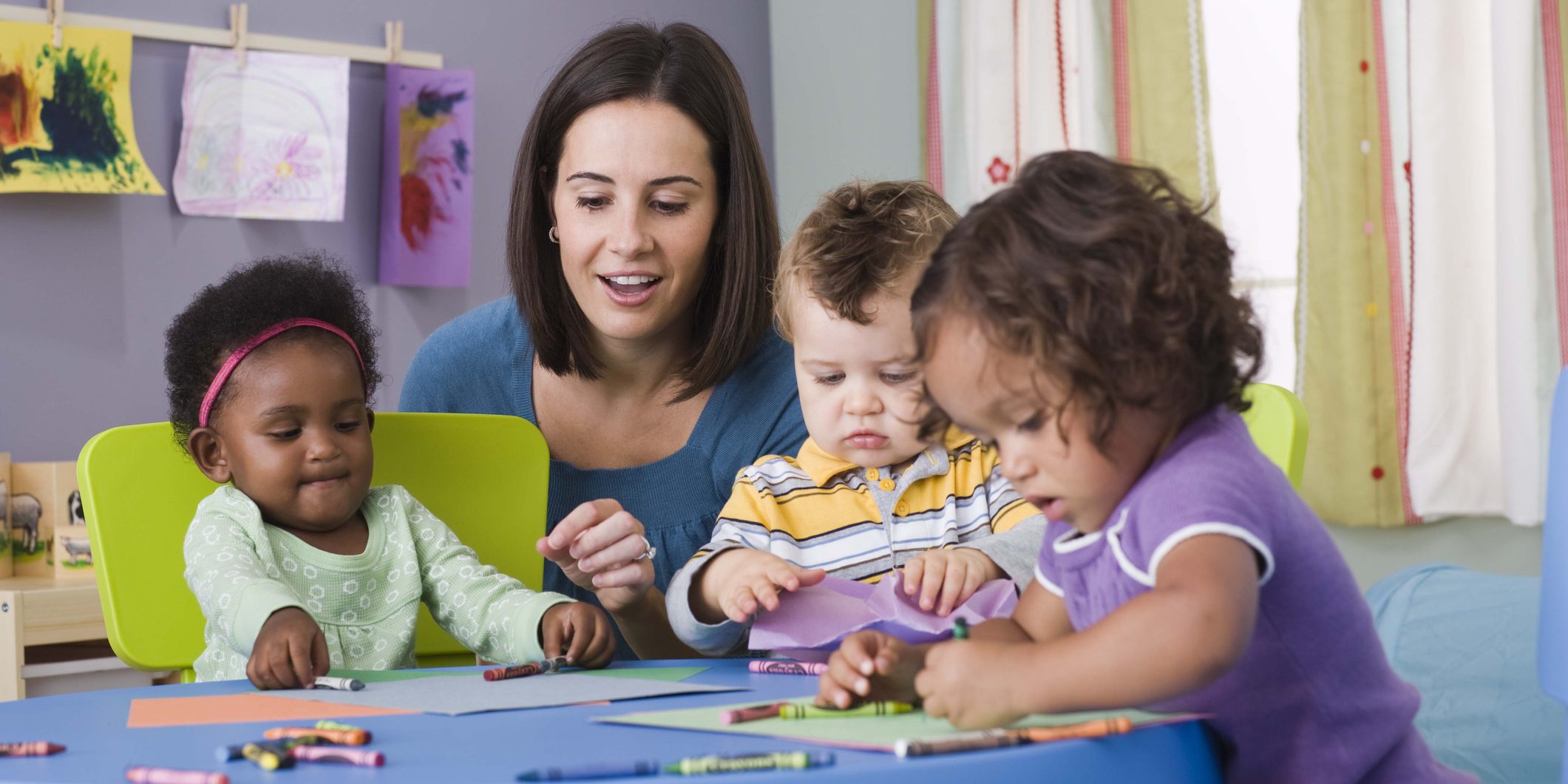
This professional development video from the WGBH Educational Foundation shows how infant and toddler teachers can have meaningful conversations by imitating, responding to, and expanding on children’s signals. Teachers can deepen or expand on children’s initiation by providing more specific information or building on a child’s background knowledge.
Age group(s): Infant, ToddlerResource Type: Video Example
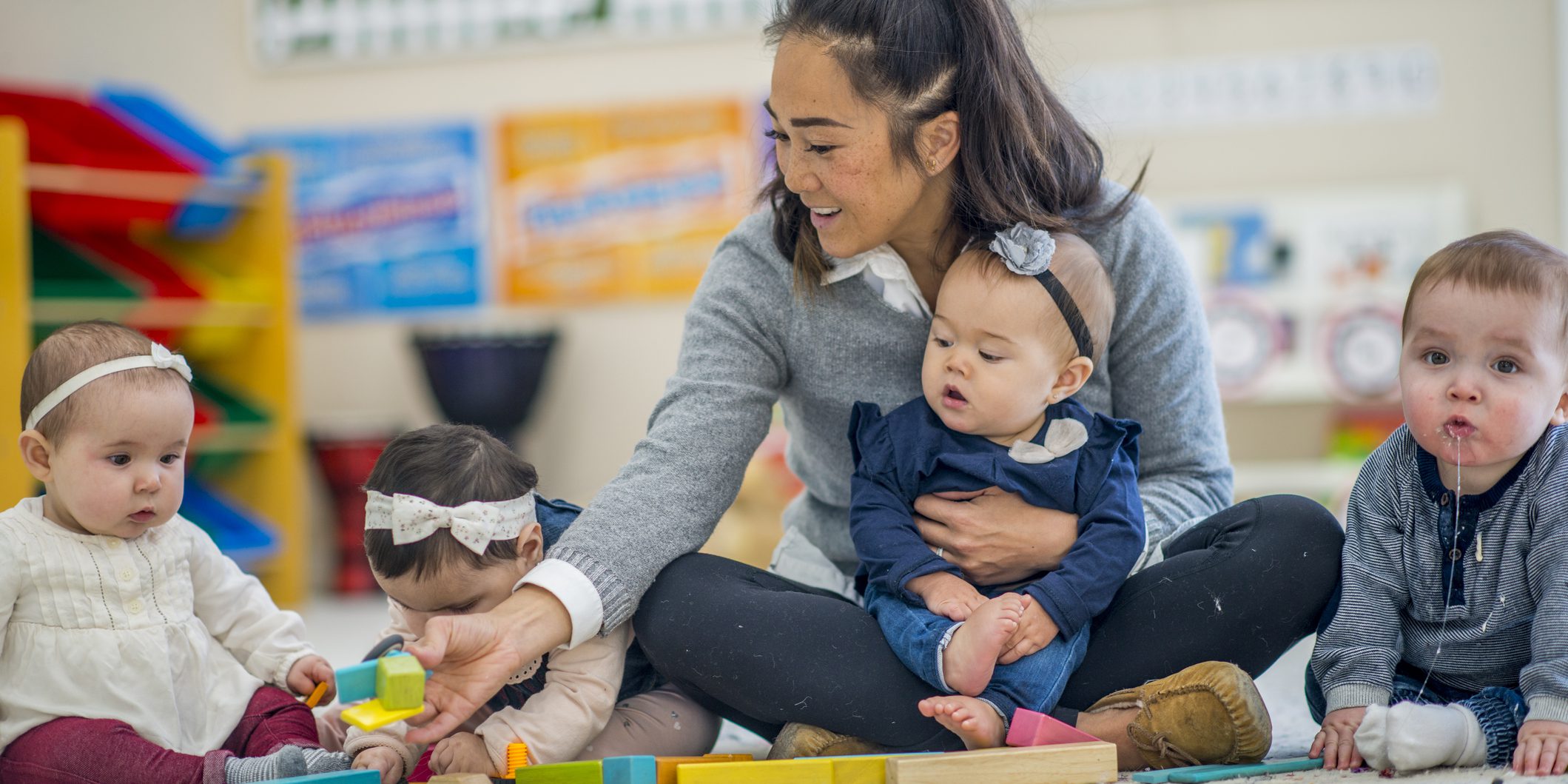
This video from the WGBH Educational Foundation shows the importance of communicating with infants throughout the day. From this video, infant teachers can see how to provide infants with language stimulation during the day’s routines and activities.
Age group(s): InfantResource Type: Video Example

This course helps teachers and caregivers understand how to be responsive caregivers to infants and toddlers through the support they provide in the areas of language and development. The training focuses on the following topics: language development theory, language mastery, stages of language acquisition, and language development within the context of culture and history.
Age group(s): Infant, ToddlerResource Type: Online Course

This self-paced training gives prekindergarten teachers an overview of the Language and Communication domain, end-of, year outcomes, and types of instructional strategies they can use to support children’s skill development. The training focuses on the following topics: listening comprehension, speaking (conversation), speech production, vocabulary, and sentence structure.
Age group(s): PreschoolResource Type: Online Course
Practice and Improve
In this video exemplar, the teachers pause to give the children an opportunity to respond. Some children may need more time while others may need less, so it is important for teachers to listen attentively and wait patiently while children attempt to verbally respond to questions.
Age group(s): Infant, Toddler, Preschool, School-ageResource Type: Video Example
In this video exemplar, the teachers asks the infant questions about the objects in the book and the outdoor learning environment. labeling objects in the book and within the outdoor learning environment. Teachers can initiate conversations with young children by asking a variety of questions during activities and routines.
Age group(s): InfantResource Type: Video Example
The video exemplar highlights moments throughout the day classroom teachers can communicate with children. Routines such as hand-washing, center time, and small groups provide teachers with opportunities to have meaningful and rich conversations.
Age group(s): Infant, Toddler, Preschool, School-ageResource Type: Video Example
During an art activity, the teacher uses descriptive language to label how the paint feels. Labeling an object or action contributes to building young children’s vocabulary and they will be more likely to use those same words when communicating with others.
Age group(s): ToddlerResource Type: Video Example

The Early Learning Matters (ELM) Curriculum is an extensive, research-informed program created to support the optimal learning and development of children from birth to five years of age. ELM offers a comprehensive, developmentally appropriate approach to meaningful learning for all children.
Age group(s): Infant, Toddler, PreschoolResource Type: Curriculum
In this video exemplar, the teachers initiate a conversation based on a child’s interest and then they pause for the child to have a chance to respond. Teachers can engage in one-on-one conversations by asking questions about a child’s interest and allowing the child the opportunity to respond as their turn.
Age group(s): Infant, Toddler, Preschool, School-ageResource Type: Video Example
In this video exemplar, the teachers expand on the children’s interest by adding words and specific information. Teachers can deepen or expand on children’s initiation by providing more specific information or building on a child’s background knowledge.
Age group(s): Infant, Toddler, Preschool, School-ageResource Type: Video Example
In this video exemplar, the teachers restate and then extend the children’s attempts to communicate. Teachers can deepen or expand on children’s initiation by providing more specific information or building on a child’s background knowledge.
Age group(s): Infant, Toddler, Preschool, School-ageResource Type: Video Example
Teachers notice and respond positively to individual children’s gestures, vocalizations, and comments in this video. They build children’s oral language skills by attentively and appropriately responding to their communication attempts.
Age group(s): Infant, Toddler, Preschool, School-ageResource Type: Video Example
In this video exemplar, the teachers use a variety of questions to communicate with children during the day. Teachers can initiate conversations with children by asking open-ended and closed-ended questions across various activities, routines, and contexts.
Age group(s): Infant, Toddler, Preschool, School-ageResource Type: Video Example
“Talk, Talk, Talk” provides tips teachers can use when talking and listening to babies and toddlers. The document suggests ways caregivers can listen attentively and respond to children to encourage back and forth conversation to develop language.
Age group(s): Infant, ToddlerResource Type: Publication
In this video exemplar, the teachers narrate children’s actions and use descriptive language to label different objects and activities. Labeling an object, activity, or action builds children’s vocabulary so they are more likely to use those same words when communicating with others.
Age group(s): Infant, Toddler, Preschool, School-ageResource Type: Video Example
In this video exemplar, the teachers use language and asks questions to expand on the children’s interests. Teachers can make comments and ask questions in response to something a child has said to build the child’s language.
Age group(s): Infant, Toddler, Preschool, School-ageResource Type: Video Example
In this series of exemplar video segments, teachers showcase providing verbal praise to infants, toddlers, preschoolers and after school children throughout the day. Their use of positive responses, feedback and praise encourages a continuation of desired behaviors.
Age group(s): Infant, Toddler, Preschool, School-ageResource Type: Video Example
View more resources by clicking the link for each measure in the Define section.